
Guide · Wilmington and Cape Fear
Installing an EV charger at home
A Level 2 charger can fill most electric cars overnight. Before you buy one, here's what your panel needs, how big the circuit should be, and how the install and permit work.
By PJ Hofer, licensed electrician (NC U.35874) · October 24, 2026
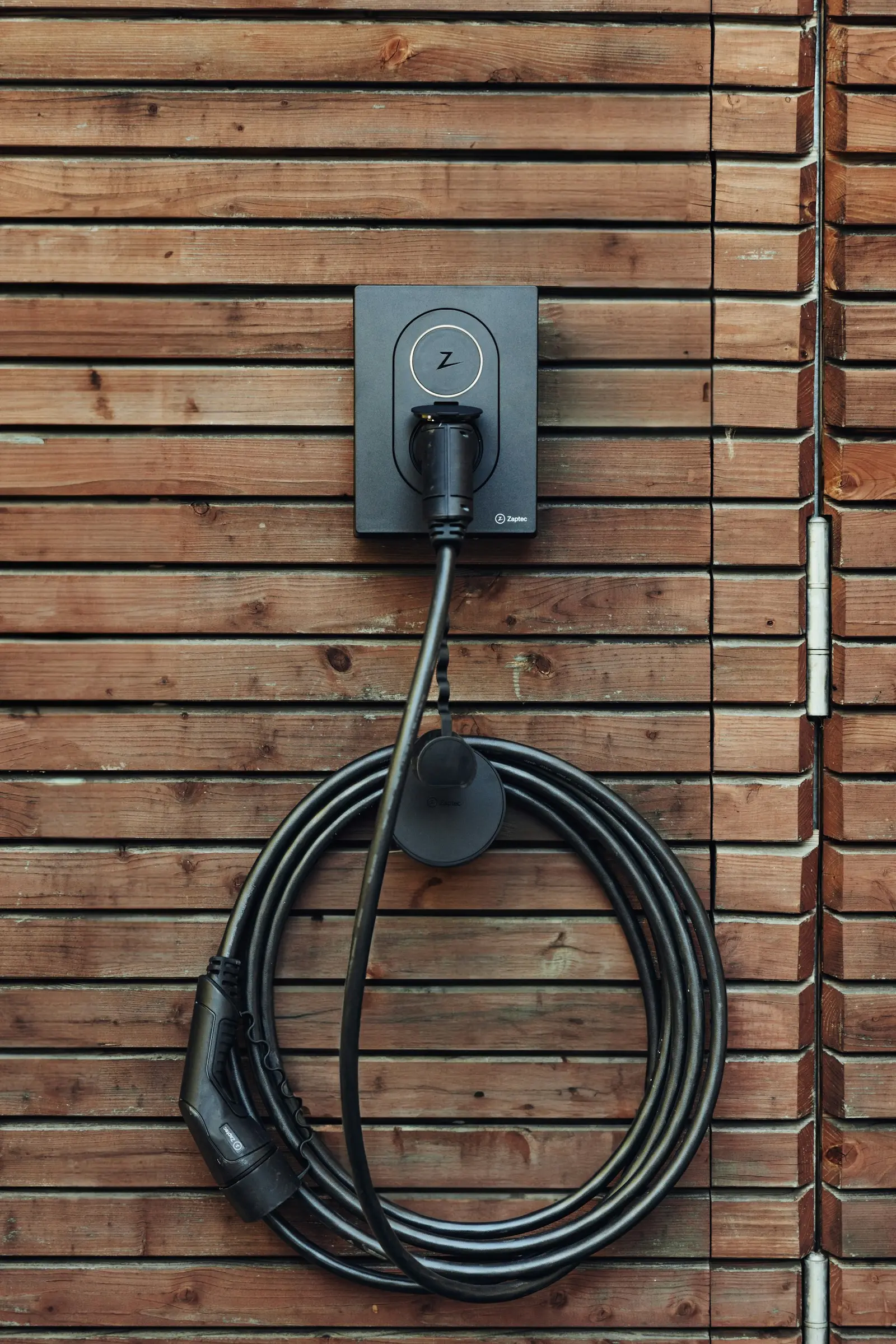
Most electric cars come with a cord that plugs into a regular outlet. That's Level 1 charging, and it adds only a few miles of range per hour. For most people, it isn't enough.
A Level 2 charger runs on 240 volts, like a dryer or a range, and can fill most cars overnight. Here's what to know before you buy one.
Hardwired charger or plug-in outlet
- Hardwired charger: mounted on the wall and wired straight to its own circuit. Clean, weatherproof and able to charge at the charger's full rating.
- 240 volt outlet: a heavy-duty receptacle your car's mobile charger plugs into. Code generally requires this outlet to have GFCI protection.
Either way, it gets its own dedicated circuit from your panel.
Sizing the circuit
Electrical code treats EV charging as a continuous load, so the circuit is sized at 125 percent of what the charger draws.
- A charger that draws 32 amps needs a 40 amp circuit.
- A charger that draws 48 amps needs a 60 amp circuit.
Most chargers can be set to draw less, which helps when your panel is tight on capacity.
Can your panel handle it?
This is the question that decides the price. Before we quote an EV charger, we run a load calculation on your home. It tells us how much capacity is left after your AC, water heater, range and everything else.
- Plenty of room: we add the circuit and install the charger.
- Tight: we set the charger to a lower current, or add a load management device that slows charging when the house needs the power.
- No room: a panel or service upgrade comes first.
Where to put it
Closer to the panel usually means less wire and a lower price. We'll also look at where your car's charge port is, how you park, and whether the charger is indoors or outside.
Permit and inspection
Adding a new 240 volt circuit needs an electrical permit and an inspection. We pull the permit, do the work and meet the inspector.
Before you buy the charger
Call us first. A two-minute conversation about your panel can save you from buying a 48 amp charger for a home that can only support 32.
Quick answers
What size circuit do I need for a Level 2 EV charger?
It depends on the charger. A charger that draws 48 amps needs a 60 amp circuit, because electrical code sizes circuits for continuous loads at 125 percent. Many chargers can be set to a lower current to fit the capacity your panel has.
Can my panel handle an EV charger?
Many can, but not all. An electrician runs a load calculation on your home to see how much capacity is left. If the panel is close to its limit, the options are a smaller charger setting, a load management device, or a panel upgrade.
Do I need a permit to install an EV charger?
Yes. Adding a new 240 volt circuit for an EV charger needs an electrical permit and an inspection.
Talk to an electrician, not a call center.
Hofer Electrical is licensed and insured in North Carolina. When you call, you talk to PJ, the owner.